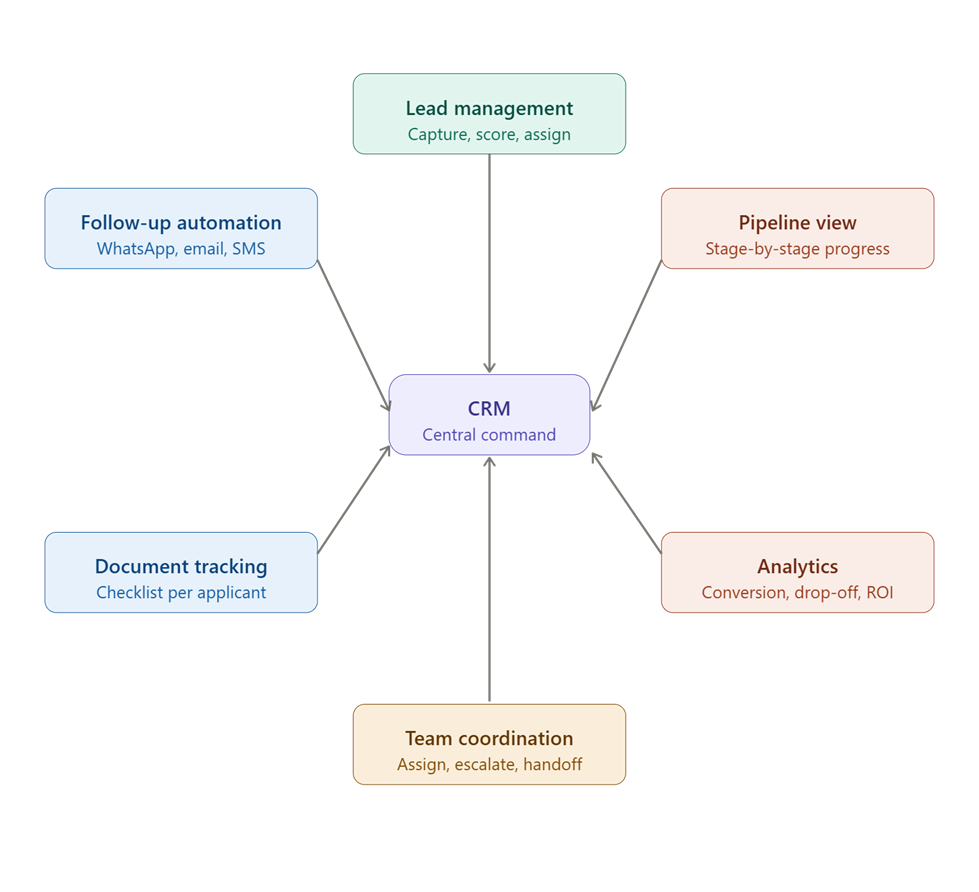
Lead volume is higher than ever. Post-pandemic immigration demand, golden visa programs, and digital nomad visas have created a flood of inquiries. Without CRM, leads fall through WhatsApp chats and email threads. With it, every lead is captured, scored, and assigned automatically.
The applicant journey is long and document-heavy. A single visa case can involve 20+ documents, multiple government portals, and a 3–12 month timeline. A CRM keeps every checklist, deadline, and status visible in one place — not scattered across consultants’ inboxes.
Competition has intensified. In markets like UAE, Canada, and Australia, applicants have 5–10 agencies to choose from. The company that follows up first and most consistently wins. CRM-driven WhatsApp and email automations ensure no lead goes cold.
Teams are scaling. As visa companies grow from solo operators to multi-consultant offices, work gets dropped in handoffs. CRM creates accountability — tasks are assigned, escalations are tracked, and managers can see progress without chasing updates.
Data is now a competitive asset. Knowing which visa type converts best, which source brings the most qualified leads, and where applicants drop off lets companies double down on what works and cut what doesn’t.
In short: in 2026, CRM is the difference between a visa company that grows and one that stays chaotic at scale